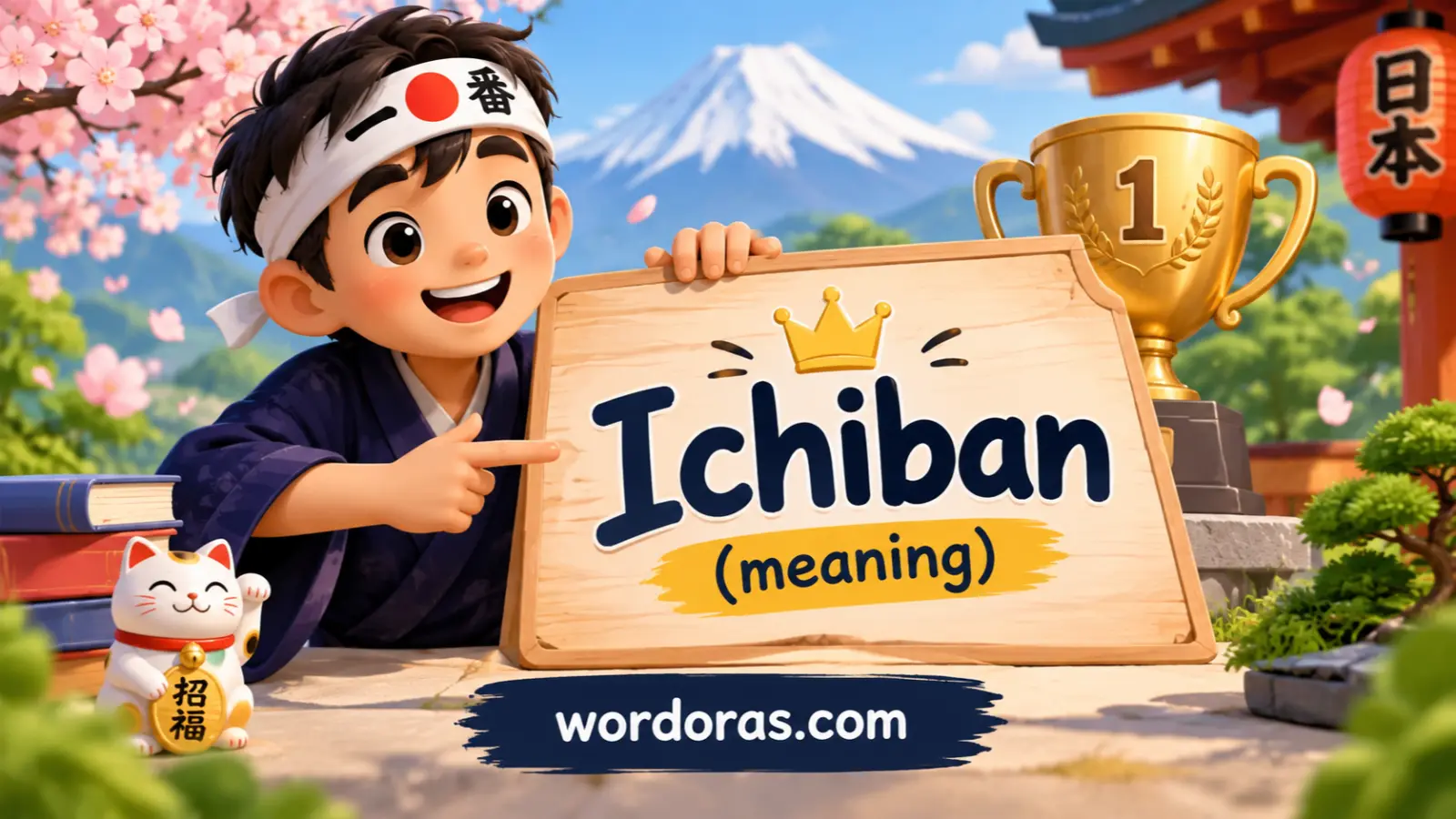
If you’ve come across the word ichiban in a Japanese anime, song, restaurant name, game, or casual conversation, you may have wondered what it actually means.
It’s a short word, but it can carry a few different shades of meaning depending on how it is used.
So, what does ichiban mean? In Japanese, ichiban (一番) generally means “number one,” “the best,” “first,” or “most.”
It is often used when comparing things or talking about something that ranks highest. For example, ichiban suki means “favorite” or, more literally, “liked the most.”
You may also see ichiban used to describe a top choice, the highest level, or something that stands out from the rest. This makes it a useful and common word in everyday Japanese.
In this guide, we’ll break down the ichiban meaning in simple English, explain how the word works in Japanese, and look at natural examples you might encounter.
We’ll also explore related phrases so you can understand not just the dictionary definition, but how Japanese speakers actually use ichiban in context.
Ichiban (一番 / いちばん) is a Japanese word meaning “number one,” “first,” “the most,” or “the best,” depending on context. It is commonly used to express superlatives, such as “the biggest” or “my favorite,” and can also refer to first place or number one in a sequence.
What Does Ichiban Mean?
Ichiban (いちばん / 一番) is a common Japanese word with several closely related meanings.
In everyday Japanese, it most often means:
- the most
- the best
- number one
- first
- first place
The exact English translation depends on how the word is used.
For example, 一番好き (ichiban suki) means “like the most” or “favorite,” while 一番大きい (ichiban ookii) means “the biggest.” When referring to an order or position, 一番 can mean “first” or “number one.”
So, if someone asks about the ichiban meaning, the simplest answer is “number one” or “the most/best.”
Quick Answer
If you see ichiban in Japanese, look at the surrounding words.
| JapaneseRomajiNatural English meaning | ||
|---|---|---|
| 一番 | ichiban | number one / first |
| 一番好き | ichiban suki | like the most / favorite |
| 一番大きい | ichiban ookii | biggest |
| 一番いい | ichiban ii | best |
| 一番高い | ichiban takai | most expensive / highest |
| 一番になる | ichiban ni naru | become number one |
The word is especially important because Japanese commonly uses 一番 + adjective to express a superlative, similar to English “the most” or “-est.”
Ichiban in Japanese: 一番 and いちばん
Ichiban is commonly written as 一番 in kanji or いちばん in hiragana.
The two kanji are:
- 一 (ichi) — one
- 番 (ban) — number, turn, or position
Together, 一番 literally conveys the idea of “number one.” From that basic idea come meanings such as “first,” “first place,” “the most,” and “the best.”
It is also commonly treated as an adverbial noun in Japanese dictionaries and learning references.
How Ichiban Is Used in Everyday Japanese
One of the most useful patterns is:
一番 + adjective
This construction expresses the highest degree of something.
For instance:
一番大きい = the biggest
一番速い = the fastest
一番高い = the most expensive / highest
一番面白い = the most interesting
Japanese does not need to change the adjective into an English-style superlative. 一番 does the work of marking the highest degree.
Another extremely common construction is:
一番好き
This means “like the most” and is often naturally translated as “favorite.”
For example:
音楽が一番好きです。
“I like music the most.”
This type of sentence is a standard beginner-level use of 一番.
Meaning by Context
The meaning of ichiban becomes much clearer when you identify the context.
1. “The most”
When 一番 appears before an adjective or similar expression, it can indicate the highest degree.
一番おいしい
= the most delicious
一番難しい
= the most difficult
一番楽しい
= the most fun
Here, ichiban works much like “most” in English.
2. “The best”
When talking about preferences or quality, ichiban can naturally translate as “the best.”
For example:
これが一番いい。
= This is the best.
この店が一番好きです。
= I like this restaurant the best.
The English translation can change depending on the adjective and sentence, even though the Japanese word remains 一番.
3. “Number one”
In a ranking or competition, 一番 can refer to number one or first place.
For example:
一番になった。
= Became number one / came in first.
This meaning is closely connected to the word’s literal “number one” sense.
4. “First”
Ichiban can also describe something that comes first in an order or sequence.
For example:
一番線
= Platform/Track 1
And:
一番に到着した。
= Arrived first.
So translating every occurrence of ichiban as “the best” would be a mistake. Context matters.
Ichiban in Comparisons
A useful structure for Japanese learners is:
[Group] で + [thing] が + 一番 + adjective
This identifies the group being compared.
For example:
クラスで一番背が高い。
= [Someone] is the tallest in the class.
Another pattern uses の中で, meaning roughly “among” or “within.”
この中で一番いい。
= The best among these.
These structures make it clear what the speaker is comparing.
Ichiban in Texts and Chats
If you’re seeing ichiban in anime subtitles, Japanese social media, games, messages, or casual conversation, it usually keeps its ordinary Japanese meaning.
You might see:
一番好き!
= I like it the most!
これが一番!
= This is the best!
やっぱりこれが一番。
= As expected, this is the best.
The casual context may make the English translation sound more expressive than the literal Japanese. That’s normal. Translation should capture the meaning of the whole sentence rather than replace every word one-for-one.
Real Conversation Examples
Here are some natural learner-friendly examples showing how the meaning changes with context.
Talking About Favorites
A: 何のスポーツが一番好き?
B: サッカーが一番好き。
Meaning:
A: Which sport do you like the most?
B: I like soccer the most.
Here, 一番好き expresses a strongest preference.
Comparing Size
これが一番大きいです。
Meaning:
“This is the biggest.”
Here, 一番 marks the highest degree of size.
Talking About First Place
彼は一番になった。
Meaning:
“He came in first.”
In this context, 一番 refers to ranking rather than an adjective’s superlative degree.
Talking About a Train Platform
一番線
Meaning:
“Platform 1” or “Track 1,” depending on the railway context.
This is an important reminder that ichiban does not always mean “best.”
Ichiban vs. Mottomo
A common question for Japanese learners is how 一番 (ichiban) differs from 最も (mottomo).
Both can express “most” or a superlative.
The main difference is often register and usage.
一番 is extremely common in everyday Japanese and conversational contexts.
最も is also a standard way to express “most,” but is more associated with formal, written, or formal-sounding language in many contexts.
For a casual conversation about your favorite food, 一番 is a natural choice.
For formal writing, 最も may appear more often.
The two can therefore overlap in meaning without always sounding identical in tone.
Ichiban vs. Saikou
Another useful distinction is between 一番 (ichiban) and 最高 (saikō).
Both can be translated as “the best,” but they do not work exactly the same way.
一番 is commonly used for comparisons and rankings:
一番おいしい
the most delicious
最高 expresses the idea of something being excellent, fantastic, or “the best” in a more evaluative or emotional way.
So:
- 一番 → highest among a comparison
- 最高 → excellent, fantastic, supreme
This distinction helps prevent overly literal translations.
When Should You Use Ichiban?
Use ichiban when you want to talk about:
- your strongest preference
- something being the most of a quality
- first place
- number one
- the first item in an order or sequence
- the highest-ranked option
It is a normal Japanese word, not inherently internet slang.
That matters if you found ichiban while looking up Japanese slang or texting language. Although it can appear in casual messages, its meaning comes from ordinary Japanese vocabulary and grammar.
Common Misunderstandings About Ichiban
Ichiban Does Not Always Mean “Best”
This is probably the biggest misunderstanding.
一番 can mean “best,” but it can also mean “most,” “first,” or “number one.”
For example, 一番線 refers to a numbered platform or track, not the “best platform.”
Ichiban Is Not Only Used for People
You can use it with preferences, qualities, places, objects, activities, and more.
For example:
一番好きな映画
= favorite movie
一番大きい都市
= biggest city
一番難しい問題
= most difficult problem
The surrounding words determine the precise translation.
“Favorite” Is Sometimes a Translation, Not a Literal Meaning
一番好き literally expresses the idea of liking something the most.
English often turns that into the more natural word “favorite.”
So:
私の一番好きな色
can naturally be translated as:
“My favorite color.”
The translation is natural English rather than a word-for-word substitution.
Similar Japanese Words and Alternatives
| Japanese | Meaning | Main nuance |
|---|---|---|
| 一番 (ichiban) | most, best, number one, first | Everyday superlative/ranking |
| 最も (mottomo) | most | More formal/written in many contexts |
| 最高 (saikō) | best, fantastic | Strong evaluation or enthusiasm |
| 第一 (daiichi) | first, primary | Priority or formal “first” |
| トップ (toppu) | top | Loanword, often used for rank/status |
| ベスト (besuto) | best | English-derived loanword |
These words overlap in some situations, but they are not interchangeable in every sentence.
Is Ichiban Slang?
No. Ichiban is not simply Japanese slang.
😁It is an established Japanese vocabulary word written 一番 or いちばん. It is used in ordinary speech, writing, comparisons, rankings, and everyday situations.
It may appear in informal internet conversations because people use ordinary Japanese vocabulary online too. Seeing it in a text message does not automatically make it slang.
Is Ichiban Used Outside Japan?
The Japanese word ichiban can appear in other languages and cultures, particularly where Japanese words have entered popular culture.
For example, a Cantonese dictionary records ichiban as a Japanese loanword meaning something like top quality or first-rate.
However, that borrowed usage should not be confused with the full range of meanings that 一番 has in Japanese.
In Japanese itself, the word has the broader meanings of “number one,” “first,” “most,” and “best.”
FAQs:
What does ichiban mean in Japanese?
Ichiban (一番 / いちばん) generally means “number one,” “first,” “the most,” or “the best.” The exact translation depends on the sentence and context.
Does ichiban mean best?
Yes, in many contexts. When used with adjectives or preferences, ichiban can naturally translate as “the best” or “the most.” For example, 一番好き means “like the most” or “favorite.”
What does 一番好き mean?
一番好き (ichiban suki) means “like the most” and is commonly translated as “favorite” when describing a person’s strongest preference.
Can ichiban mean first?
Yes. 一番 can refer to being first in a sequence or ranking. For example, 一番になった can mean “came in first” or “became number one.”
Is ichiban Japanese slang?
No. Ichiban is standard Japanese vocabulary, although it can certainly appear in casual texts, online conversations, anime, games, and other informal settings.
What is the difference between ichiban and saikou?
Ichiban commonly expresses a superlative or ranking, such as “the most delicious.” Saikō is more about something being excellent, fantastic, or the best in an evaluative sense.
Final Takeaway:
The simplest way to remember the ichiban meaning is “number one.” From that core idea, 一番 (いちばん) can mean “first,” “the most,” or “the best,” depending on context.
When you see 一番好き, think “like the most” → “favorite.”
😂When you see 一番大きい, think “the biggest.”
When you see 一番になった, think “came in first” or “became number one.”
The key is not to memorize just one English translation. Learn ichiban as a flexible Japanese word whose meaning becomes clear from the sentence around it.

I’m Allen Vick, the creator of Wordoras.com, a website dedicated to making words, phrases, and their meanings simple and easy to understand.
I’m passionate about clear language and helping readers discover the meaning, usage, pronunciation, and context behind everyday words and expressions. Through Wordoras, I aim to make learning new words simple, practical, and enjoyable for everyone.